
A publicly accessible Elasticsearch instance was found exposing more than 360 GB of data. The collection included approximately 1.4 billion credential records and over 1.3 million records containing U.S. consumer personally identifiable information.
The scale was significant, but the organization of the data was equally important. The infrastructure appeared to aggregate and categorize material from multiple sources, including Telegram channels, rather than holding a single isolated leak.
A large, structured credential repository
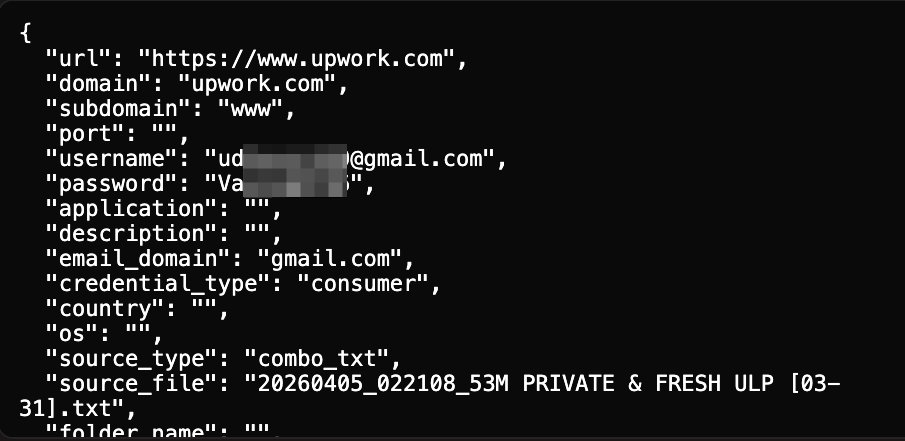
Observed credential records contained fields for a target URL, domain, subdomain, username, password, email domain, credential type, source type, and source file. This structure suggests the data had been normalized to support filtering and retrieval across a very large collection.
One redacted record referenced a consumer account and identified its source as a combo-list text file. At this scale, categorization by domain could allow users of the dataset to narrow searches toward specific services—including banking, cryptocurrency, marketplaces, and other high-value platforms.
Consumer data in the same infrastructure
A separate sample showed records containing first and last names, email addresses, phone numbers, street addresses, cities, states, ZIP codes, and country values. The source metadata identified an imported spreadsheet and included an ingestion timestamp.
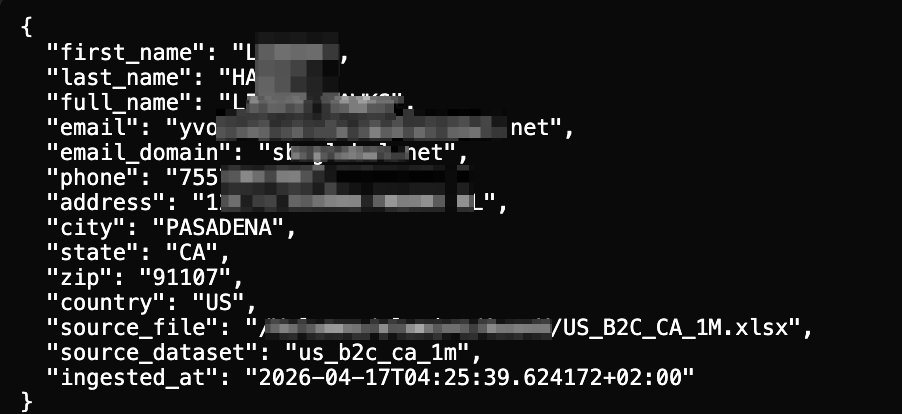
The presence of credentials and consumer identity data in the same searchable environment increases the potential for correlation. Even when individual datasets originate from different sources, combining them can produce more complete profiles for account takeover, targeted phishing, impersonation, and other abuse.
What remains unknown
The operator and intended purpose of the infrastructure could not be confirmed from the available evidence. The collection may have supported a data or intelligence service, malicious activity, or another aggregation workflow. The exposed structure demonstrates capability and risk, but it does not establish attribution or intent.
That distinction matters. Publicly accessible infrastructure can reveal what data exists and how it is organized without providing enough evidence to make a responsible claim about who operated it or why.
Risk to affected users and organizations
- Account takeover: Valid credentials can provide direct access to consumer and enterprise services.
- Credential stuffing: Reused username and password combinations can be tested across other platforms.
- Targeted phishing: Domain categorization and identity data can make lures more convincing.
- PII abuse: Names, contact details, and addresses can support impersonation, fraud, or enrichment of existing criminal datasets.
Why this matters
This exposure illustrates the risk created when large collections are not only stored together, but normalized and indexed for search. A raw leak is already dangerous; an aggregated repository organized by target, credential type, source, and identity attributes can make that data substantially easier to operationalize.
It also reinforces a recurring lesson from exposure research: Elasticsearch instances holding sensitive data should never rely on obscurity. Authentication, network-level access controls, continuous exposure monitoring, and strict data-retention practices are essential.
Sensitive values shown in the source material were redacted. No credentials or personally identifiable records are reproduced in this article.